
Conway Twitty Talks Origins and Early Days
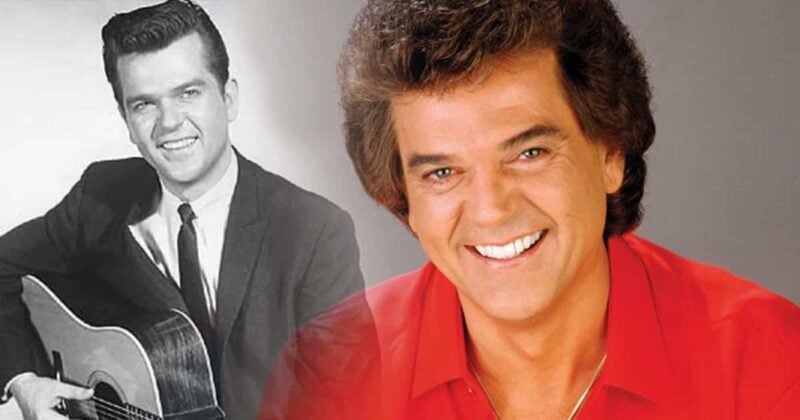
Nicknamed “The High Priest of Country Music,” Conway Twitty helped shape a genre and define an era. He possessed a style and a swagger that were difficult to replicate and impossible to resist. And though his Country music career only spanned from the mid-60s to the early 90s, his contributions to Country Music cannot be overstated. Twitty is on the short list for most adored American artists of the twentieth century. The ladies loved him and the men wish they could love like him.
The future superstar was born Harlod Lloyd Jenkins in 1933 Mississippi. Ten years later, he moved to Arkansas with his family. At the age of 12, Jenkins formed his first band. Cut to 1956, Harold was 23 years old and fresh off a stint in the U.S. Army. Upon returning home, he decided to pursue music as a profession in lieu of a promising baseball career. He also adopted a stage name. As legend has it, the moniker “Conway Twitty” originated out of regional convenience.
Conway broke into the pop charts in 1958. He was a successful early Rock star; however, he was destined to be a Country music icon. In a stunning move that altered his career trajectory, he became a genuine crossover sensation. Years later Twitty stated, “A lot of country artists are trying to cross over to the pop charts. But I’ve already been on the other side of the fence. I like the side of the fence I’m on.” Conway was inducted into the Country Music Hall of Fame in 1999. Sadly, the honor came six years after his premature death at the age of 59.
The owner of over fifty-five #1 singles, Twitty enjoyed more success than any Country crooner of his era. But Conway was a conflicted superstar. It seemed he enjoyed the spotlight but shunned the limelight. He was a small-town country boy who became the most successful Country artist of his time. Twitty was not fond of speaking about himself, but that is not to say he never did. This is Conway Twitty talking his origins and early days.
“I was going to be a preacher”
I love gospel music. I was going to be a preacher when I was like 15, 16, 17 years old. I did a lot of that.
“Spring training”
I played semi-pro ball and had a contract with the Phillies at one time…I was supposed to go to spring training in March, and I got drafted in January. And I went into the Army. I played baseball in the Army and also played music.
“Elvis”
When I got out of the Army, that’s when Elvis was first getting started. I got back to the United States and heard my first Elvis Presley record, and I really liked it and decided ‘well, I think I can do that.’
“An interesting name”
My real name is Harold Jenkins. But I thought, disc jockeys back in the ’50s got so many records every week. They had to decide what they were gonna play and what they weren’t gonna play. And I thought, well, maybe with an interesting name like Elvis Presley or something like that, they might play it.
“Conway Twitty”
I started thinking about all kinds of names. Finally, in desperation, I just got the map down and looked around the Memphis area. That’s where I’m from down there. I came across Conway, Arkansas and I came across Twitty, Texas. I put them together and that’s how it’s been…I’ve been Conway Twitty longer than I ever was Harold Jenkins.
Sun Records:
After Conway decided to pursue a career as a recording artist, he had only one record label and one record producer in mind. Sun Records and Sam Phillips. Off to Memphis he went. “I cut a lot of stuff with Sam; I never did wind up with a contract with Sun…Until I went into the Army, I’d never been north of Helena, Arkansas. Memphis is about 80 miles north of Helena. But I thought Sun Records was the only label there was. Elvis was on it, and Carl Perkins was on it, and Johnny Cash was on it. Shortly after that, Jerry Lee showed up.”
Jerry Lee:
“Sam Phillips called me in one day, and up to this point I had just been doing demos. But Sam said ‘this guy walked into my office. This cocky dude came in here and told me how great he was. And what he could do’ and he said, ‘I want you to hear what he did.’ And he put this tape on, and this song played and I listened to that. It was an old Country song, dear to my heart. This guy had taken the song and put this boogie-woogie to it and I’m like ‘Sam, this guy will never make it.’ And that song went on to become a gigantic smash. And of course, he went on to become one of my all-time favorite artists.” The song was “You Win Again,” written by Hank Williams. The artist was Jerry Lee Lewis.
“I’d do it exactly the same way”
At the height of his fame, Conway was once asked if he had a second chance, would he change his life in any way? With no hesitation, he answered, “I think I’d do it exactly the same way. I’ve been real lucky and very fortunate.” Any fan of Conway Twitty’s feels the same way.


