
The 30 Saddest Country Songs Ever Recorded: A Definitive Ranked List
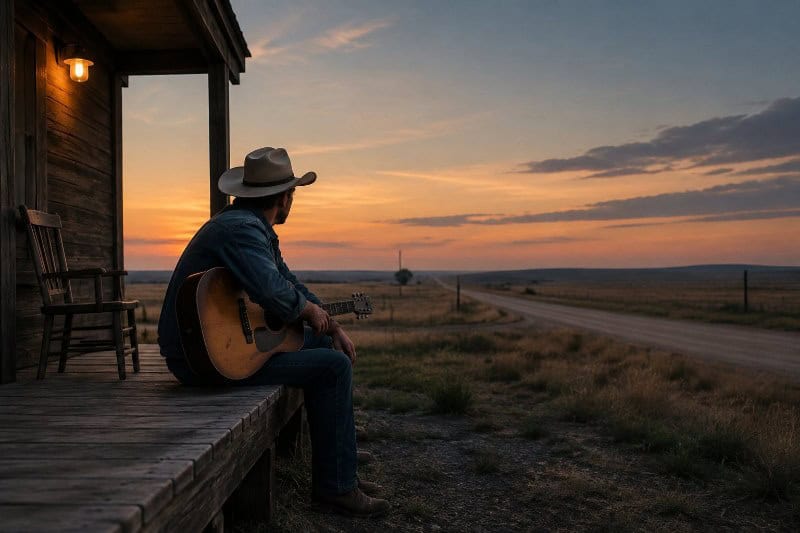
Country music has built much of its identity on songs that confront pain directly. Nobody does heartbreak, grief, and loss quite like a country songwriter with a guitar and a true story to tell.
These songs don’t rely on vague sentiment. They tell specific stories about death, divorce, addiction, war, and separation, and they tell them with unflinching honesty.
You’ll find that the saddest entries in the genre share a common approach: plainspoken lyrics paired with melodies that reinforce rather than soften the message. This list gathers 30 of those songs, spanning more than seven decades of country music history.
Grab a tissue before you start. If you want more after this, check out our picks for the best country songs of all time and the 30 saddest songs of all time.
1. “He Stopped Loving Her Today” – George Jones
You already know this one if you know country music at all. Released in 1980, it tells the story of a man whose love for a woman only ends with his death. The lyrics follow a simple, devastating arc: he said he’d love her until he died, and he did.
Bobby Braddock and Curly Putman wrote it, and George Jones recorded it during a turbulent period in his life. He reportedly found the subject too bleak to ever be a hit. His instincts were wrong.
The song went to number one, won Jones the Grammy for Best Male Country Vocal Performance, and is widely regarded as one of the greatest country recordings ever made. You hear the weight of real experience in his voice, not just technical skill.
What makes it so sad isn’t just the plot. It’s the way Jones delivers the final lines, turning a man’s quiet devotion into something closer to tragedy. You’re left with a portrait of love that outlasts everything, including the person who felt it.
2. “Whiskey Lullaby” – Brad Paisley and Alison Krauss
You hear two voices carry this duet, released as a single in 2004 from Brad Paisley’s album Mud on the Tires. Bill Anderson and Jon Randall wrote it. Alison Krauss joins him, and her delicate harmonies deepen the grief in every verse.
The lyrics trace a man destroyed by heartbreak after his partner leaves him. He drinks himself into an early grave, and his story doesn’t end there.
The second verse shifts to her perspective years later. Guilt consumes her, and she follows the same path to the same fate, tying both lives together in loss.
You feel the weight of addiction, regret, and death woven through a single narrative. The song doesn’t rely on exaggeration; it states the tragedy plainly, which makes it harder to shake.
Its restrained instrumentation lets the vocals carry the sorrow. You’re left with a story of two people who couldn’t survive without each other, even after they were apart.
3. “Go Rest High on That Mountain” – Vince Gill
You hear the grief in this song before you even register the lyrics. Vince Gill started writing it after Keith Whitley died in 1989 and finished it after his older brother Bob died of a heart attack in 1993. He released it in 1995 as a single from his album “When Love Finds You,” and it won the Grammy for Best Country Song.
The song works as both a eulogy and a hymn. You notice the gospel influence in its structure, with its message of release from suffering and reunion in the afterlife. That spiritual framing gives the sadness a different texture than most heartbreak songs on this list.
What makes it endure is how personal and universal it feels at once. You can apply it to any loss, yet you know exactly whose grief inspired it. Gill’s voice cracks with restraint rather than melodrama, which makes the emotion land harder.
Decades later, you still hear this song played at funerals and memorials, a testament to how precisely it captures mourning.
4. “Travelin’ Soldier” – The Chicks
You hear a quiet story unfold before you realize how much it will cost you emotionally. Written by Bruce Robison in 1996, the song was later recorded by The Chicks for their 2002 album Home.
The lyrics follow a shy young soldier who meets a teenage girl at a small-town cafe before shipping out during the Vietnam War. You watch their connection grow through letters, built on small, honest moments rather than grand declarations.
What makes this song land hard is the ending. You learn of the soldier’s fate the same way she does, through a list of names read aloud in public, with no warning or preparation.
The restrained arrangement keeps your focus on the narrative itself. There are no dramatic swells or vocal theatrics, just a steady delivery that lets the tragedy speak for itself.
You’re left with the quiet devastation of a love that never had the chance to fully form, cut short by war before it could become anything more than letters and memory.
5. “Concrete Angel” – Martina McBride
You hear it as a story before you hear it as a song. Stephanie Bentley and Rob Crosby wrote “Concrete Angel,” and Martina McBride recorded it for her 2001 Greatest Hits album and released it as a single in 2002.
The lyrics follow a young girl suffering abuse at home while the adults around her fail to intervene. McBride’s delivery stays restrained rather than theatrical, which makes the subject matter land harder.
You notice the imagery right away: a statue of an angel, a child who finds freedom only in death. That central metaphor gives the song its title and its emotional weight.
What makes this track difficult to listen to is its subject. Child abuse isn’t a common theme in mainstream country radio, and McBride doesn’t soften it. You’re left with a song that asks you to sit with discomfort rather than offering easy resolution. It remains one of the most emotionally direct songs in her catalog.
6. “Don’t Take the Girl” – Tim McGraw
You hear this one and immediately recognize the setup: a father-son fishing trip, young Johnny begging his dad not to bring a little girl along on their outing. That small, selfish request sets up a song built on contrast and time.
The track appeared on McGraw’s 1994 album “Not a Moment Too Soon” and became his first number one hit. Written by Craig Martin and Larry Johnson, it follows Johnny across several stages of his life, using the same plea in different circumstances.
As the story moves forward, you watch Johnny grow up, fall in love with that same girl, and eventually face losing her during childbirth. The final verse flips his words into a desperate prayer, asking for her life to be spared instead.
You feel the sadness build through repetition rather than shock. The song doesn’t rely on a single tragic image; it stretches grief across a lifetime, making the ending land harder because you’ve followed Johnny the whole way.
7. “The Little Girl” – John Michael Montgomery
You hear a different kind of sadness in this one, written by Harley Allen and released in 2000 on Montgomery’s album “Brand New Me.”
The story follows a young girl growing up with two addicted, neglectful parents. She witnesses a violent night that leaves both parents dead, then gets taken in by a new family who introduces her to church.
What makes this song hard to listen to is the shift partway through. You expect a straightforward tragedy, but the narrative turns toward faith and redemption, which only sharpens the contrast with the abuse and loss described earlier.
The song reached number one on the Billboard country chart, and it remains one of Montgomery’s most recognized recordings.
Listeners often point to the vivid, unflinching details about addiction and childhood neglect as the reason it stays with you long after it ends.
8. “I’m So Lonesome I Could Cry” – Hank Williams
You hear it in the first few notes: a slow, aching steel guitar that sets the tone before a single word is sung. Hank Williams wrote and recorded this song in 1949, and it remains one of the most recognized ballads in country music.
The lyrics use simple, natural images, like a whippoorwill and a falling star, to describe isolation. You get the sense that the sadness is not dramatic but quiet and ordinary, which makes it feel more real.
Williams wrote the song during a difficult period in his personal life, and that context shapes how you hear the lyrics. It was first released as the B-side of “My Bucket’s Got a Hole in It.”
You can trace much of modern country heartbreak songwriting back to this track. Countless artists have covered it since, but Williams’ original version still defines the feeling of being completely alone.
9. “Holes in the Floor of Heaven” – Steve Wariner
You hear two losses in this song, separated by decades but tied together by the same image. Steve Wariner wrote the track with Billy Kirsch and released it in 1998 as the lead single from his album Burnin’ the Roadhouse Down.
The lyrics open with a boy losing his grandmother, then move forward in time to the narrator losing his young wife. Each verse ends with the same comfort: picturing the person watching over him through “holes in the floor of heaven.”
You notice how the song avoids anger or despair. Instead, it offers a gentle explanation for rain, turning grief into something almost tender rather than devastating.
This approach is part of why the song resonates with so many listeners. You’re given permission to find meaning in loss rather than just mourning it.
The song became one of Wariner’s best-known singles and is frequently cited among the saddest country songs ever recorded, largely because it deals with loss at two very different stages of life within a single narrative.
10. “Where Were You (When the World Stopped Turning)” – Alan Jackson
You hear this song and you’re immediately pulled back to September 2001. Alan Jackson wrote it just weeks after the terrorist attacks, trying to process emotions that felt too large to name. He released it as the lead single from his album Drive, and it quickly became one of the defining musical responses to that tragedy.
What makes this track so heavy is its restraint. Jackson doesn’t lecture you or offer easy answers. Instead, he asks simple questions about where you were, what you felt, and how you reached for comfort when the news broke.
You get the sense of a nation in shock, searching for faith and connection amid confusion. The song doesn’t politicize the moment; it humanizes it. Jackson’s plainspoken delivery makes the grief feel personal rather than abstract, which is exactly why it still resonates with you decades later.
11. “If You’re Reading This” – Tim McGraw
You hear this one as a letter, not a love song. Tim McGraw wrote the track with Brad and Brett Warren, and it plays like one of those letters soldiers write home, meant to be opened only if they don’t survive.
The structure makes it hit hard. You’re given the voice of a soldier addressing his family, saying goodbye in case he doesn’t make it back from war.
McGraw first performed it live at the 2007 ACM Awards, and the reaction in the room was immediate. Radio stations picked up that live recording, turning it into a single almost by accident rather than a planned release.
What makes you feel the weight of this song is its restraint. There’s no melodrama in the delivery, just plain language about love, duty, and mortality.
For anyone with ties to military service, the song lands even harder. You’re left sitting with the idea that some goodbyes are written before they’re ever needed.
12. “The Dance” – Garth Brooks
Tony Arata wrote “The Dance,” and Garth Brooks recorded it for his 1989 self-titled debut album. It was released as a single in 1990 and became one of his signature songs.
The lyrics use a romantic relationship as a metaphor for life itself. You hear a narrator reflecting on a love that ended in heartbreak, yet he refuses to say he wishes he’d avoided it.
The song’s central idea is that you can’t have the joy of the dance without accepting the risk of the fall. That acceptance of pain as the price of meaningful experience gives the song its emotional weight.
Brooks has also used the song to honor people who died doing what they loved, including performers and athletes, which broadened its meaning beyond romantic loss. You feel the sadness not just in the lyrics but in the resigned, steady way Brooks delivers them.
Decades after its release, the song remains a staple at tributes and memorials, a sign of how deeply its message about loss and acceptance resonates with listeners.
13. “Alyssa Lies” – Jason Michael Carroll
You hear this song as a father’s account of what his daughter learns in grade school, and it is not an easy lesson. Jason Michael Carroll wrote and recorded the track, releasing it in October 2006 as his debut single from the album Waitin’ in the Country.
The narrator describes his daughter’s friendship with a classmate named Alyssa. She arrives at school with bruises she cannot explain and stories that do not add up.
You already sense where this is heading before the final verse confirms it. The story is told through a child’s eyes, and that innocence gives the song its weight.
You will not find a softened ending here. The song closes on the outcome you feared from the first verse, without offering comfort or resolution.
What makes it so sad is how ordinary the setup feels. A child tells another child something at school, and that detail alone carries the entire tragedy.
14. “The Baby” – Blake Shelton
You hear a quiet sadness in “The Baby” that builds slowly rather than hitting you all at once. Blake Shelton released the song in 2002 as the first single from his album “The Dreamer.” It was written by Michael White and Harley Allen, with White drawing on details from his own life.
The lyrics trace a youngest child’s journey from infancy through adulthood. You follow him as he gets into trouble, grows older, and moves away, while his mother continues to see him as “the baby” no matter his age.
The final verse delivers the emotional blow. You learn that the son is away when he receives word that his mother is dying, and he does not make it back in time to say goodbye. His grief closes the song on a raw, unresolved note.
The song became a number one country hit, and it still resonates deeply with listeners who have experienced a similar loss.
15. “Over You” – Miranda Lambert
When you listen to “Over You,” you’re hearing a song built from real grief. Miranda Lambert co-wrote the track with her then-husband Blake Shelton, drawing on his personal loss. Shelton’s older brother, Richie, died in a car accident in 1990, and that tragedy shaped the song’s lyrics.
The track appeared on Lambert’s 2011 album Four the Record and was released as a single in January 2012. You can hear the restraint in her vocal performance, which never overplays the emotion despite the subject matter.
What makes this song sad is its honesty about unresolved mourning. The lyrics describe grief that lingers for years rather than fading on schedule, which contradicts the comforting idea that time heals everything.
You get a sense of someone still working through loss long after others expect them to have moved on. That tension between outward composure and ongoing private pain gives the song its emotional weight.
16. “Three Wooden Crosses” – Randy Travis
You hear a story song unfold like a parable, and that structure is part of what makes it hit so hard. Written by Kim Williams and Doug Johnson, the song was released in November 2002 as the lead single from Travis’s album “Rise and Shine.”
The narrative follows a farmer, a teacher, a hooker, and a preacher riding a bus bound for Mexico. A crash with an eighteen-wheeler takes three of their lives, and only the hooker survives. Before he dies, the preacher presses his blood-stained Bible into her hands.
You learn near the end that she turned her life around and became the narrator’s mother, and that the narrator is now a preacher himself. That twist reframes everything you just heard, turning a roadside tragedy into a story about faith and quiet purpose.
The song went to number one and earned Song of the Year honors from the Country Music Association. You feel the sadness build slowly, then land with full weight once the connection between strangers and family becomes clear.
17. “When I Call Your Name” – Vince Gill
You hear it right away in Vince Gill’s voice: a man coming home to a house that feels emptier than it should. Co-written by Gill and Tim DuBois, the song served as the title track to his 1989 album and became his breakthrough single after its 1990 release.
The lyrics follow a simple, devastating idea. Someone calls out for a partner who is gone, and the silence that answers says everything words cannot.
Patty Loveless added backing vocals, and her harmonies deepen the sense of isolation in the chorus. You can feel the loneliness build rather than explode, which makes it linger longer.
The song reached number 2 on the Billboard country chart and earned Gill wide recognition in Nashville. It also won the CMA Single of the Year award, a mark of how deeply it resonated with listeners.
What makes it sad is its restraint. You are not told exactly what happened, only that someone is missing, and that absence carries the entire weight of the song.
18. “If Tomorrow Never Comes” – Garth Brooks
You hear the premise before you hear the melody: what if the person you love woke up tomorrow without you? Garth Brooks wrote this song with Kent Blazy, and it became the second single from his self-titled 1989 debut album on Capitol Nashville.
The song is built around one simple question: if you died tonight, would the person you love know how much you loved them? That question is the emotional core of the lyric, and it gives the song its honesty. It also became Brooks’ first number one hit.
What makes this track sad isn’t tragedy or loss in the traditional sense. You feel the weight of uncertainty instead, the fear of leaving things unsaid.
It asks you to consider your own relationships and whether the people closest to you know how you feel. You don’t need a death or a breakup to feel the ache here, just the possibility of running out of time.
19. “Blue Eyes Crying in the Rain” – Willie Nelson
You hear a song that was written decades before Willie Nelson ever touched it. Fred Rose wrote “Blue Eyes Crying in the Rain” in the 1940s, and Roy Acuff first recorded it in 1947. Nelson’s version didn’t arrive until 1975, when he included it on his concept album Red Headed Stranger.
You notice how sparse the arrangement is. The arrangement is built around his voice and guitar, with a quiet sense of loss running through every line. That stripped-down sound stood out against the polished country music of the time, and it became his first number-one hit as a performer.
You feel the grief in the lyrics themselves, built around a farewell and the memory of someone’s eyes. The song doesn’t rely on big words or dramatic flourishes. Its sadness comes from restraint, from what’s left unsaid, and that’s part of why it has stayed with listeners for so long.
20. “Seven Spanish Angels” – Willie Nelson and Ray Charles
You hear two legendary voices trading lines on a song that blends country storytelling with soul. Troy Seals and Eddie Setser wrote this track, and Ray Charles recorded it as a duet with Willie Nelson. It appeared on Charles’ 1984 album Friendship.
The song follows a western narrative similar to classic story songs about outlaws and doomed love. A man and woman face a desperate standoff with law enforcement, and the situation ends in death. You feel the weight of the lyrics as they describe angels taking the woman’s soul to heaven.
What makes this song sad is the sense of inevitability running through it. You know from the opening verses that the couple’s fate is sealed, yet the narrative pulls you forward anyway. Charles’ and Nelson’s voices carry genuine emotion, giving the tragic story a human dimension that stays with you long after the final note fades.
21. “The Grand Tour” – George Jones
You hear grief turned into architecture in this song. Written by Norro Wilson, Carmol Taylor, and George Richey, “The Grand Tour” was released in 1974 and became one of Jones’s signature hits, reaching number one on the country charts that year.
The lyrics use a house tour as the framing device. You move room to room with the narrator, and each space reveals another piece of a marriage that has ended, with a wife and child now gone.
What makes this song sad is its restraint. You never get melodrama or anger, just quiet description that lets the devastation speak for itself.
Jones recorded it with the kind of vocal control that made him one of the genre’s most respected singers. You feel the weight behind his delivery, especially in how he lingers on certain lines.
The song remains one of the most cited examples of heartbreak in country music, often ranked among the saddest recordings in the genre.
22. “Riding with Private Malone” – David Ball
You hear this song as a story first and a tragedy second. Released in 2001, it tells of a man who buys a classic Corvette once owned by a soldier named Private Malone, killed in Vietnam before he could drive the car himself.
As the new owner drives the Corvette, he starts to sense the soldier’s presence, almost like a guardian watching over him. The song builds toward a moment where that presence saves his life, tying the soldier’s sacrifice directly to the present day.
You feel the weight of it because the song honors someone who never got to live out his own future. His death becomes meaningful only through this fictional connection decades later, which highlights how much time and life he lost.
The narrative style sets it apart from more personal ballads on this list, but the emotional core is the same. You are left thinking about young soldiers whose lives were cut short, and the families and possibilities left behind.
23. “You Should Be Here” – Cole Swindell
You feel the weight of this song the moment Cole Swindell starts singing. Released in 2015 as the title track to his second studio album, it became one of his signature hits. He co-wrote it with Ashley Gorley about his father, who died suddenly in 2013 just as Swindell’s career was taking off.
The lyrics center on someone who is gone, imagining all the ordinary moments they are missing: cookouts, holidays, everyday life continuing without them. You recognize that absence in the details Swindell chooses, which feel specific rather than generic.
What makes this track hit hard is how ordinary the missing moments are. The music video, filled with family photos of Swindell and his dad, made the loss feel even more personal, and it is part of why listeners connect with it so strongly.
The song topped both the Hot Country Songs and Country Airplay charts, becoming one of Swindell’s most successful singles. Its emotional honesty set it apart from his earlier, more upbeat material.
24. “Drink a Beer” – Luke Bryan
You hear this song and immediately sense it carries more weight than a typical Luke Bryan single. Released in 2013 from his album Crash My Party, it was written by Chris Stapleton and Jim Beavers. The track reached number one on the Billboard Country Airplay chart in early 2014.
What makes this one hit differently is the personal connection behind it. Bryan has spoken about relating to its themes after losing both his older brother and his older sister. That real-life grief gives the performance an authenticity you can feel in every verse.
The lyrics focus on quiet mourning rather than dramatic declarations. You picture someone sitting alone, working through loss by simply having a drink and reflecting instead of falling apart. That restraint is what makes the song so affecting.
It shows you that even an artist known for upbeat, party-driven anthems can deliver a devastating meditation on loss when the material calls for it.
25. “Crazy” – Patsy Cline
You know “Crazy” as one of the most recognizable country songs ever recorded, written by a young Willie Nelson before he found fame as a performer. Patsy Cline recorded it in August 1961 at Bradley Film and Recording Studio in Nashville, with Owen Bradley producing.
You should know Cline was recovering from a serious car accident at the time, and the session reportedly came together despite her physical pain. Decca Records released the song in October 1961, and it became one of her signature performances.
The sadness in “Crazy” comes from its portrayal of helpless devotion. You hear a narrator who admits to irrational, self-destructive love, fully aware of the pain it causes but unable to stop.
Cline’s vocal delivery carries a restrained ache that makes the heartbreak feel real rather than performed. You sense the weight of her phrasing, especially in the way she lingers on certain words, turning a simple lyric into something emotionally complex and enduring.
26. “Sam Stone” – John Prine
You hear a quiet devastation in this song that few writers ever managed to capture. John Prine wrote and recorded it for his self-titled debut album in 1971, and it remains one of his most discussed works.
The song follows a soldier who returns home from war addicted to morphine, unable to shake the habit that started with his medical treatment. You watch his family struggle as his addiction consumes him, ending in his death from an overdose.
Many listeners connected the song to the Vietnam War, though Prine kept the lyrics broad enough to speak to any soldier’s experience with addiction and neglect. The chorus, with its haunting line about a hole in daddy’s arm where all the money goes, gives you a blunt, unsentimental look at the cost of war on ordinary families.
You feel the sadness build through plain, unadorned language rather than dramatic flourishes. That restraint is part of what makes the song endure as one of the starkest portraits of loss in American songwriting.
27. “Elephant” – Jason Isbell
You hear the weight of this song from its opening lines. Jason Isbell wrote and recorded “Elephant” for his 2013 album Southeastern, released not long after he got sober and married singer-songwriter Amanda Shires.
The song tells the story of a friend dying of cancer, and you feel the bluntness of the details right away. There is no metaphor softening the illness here, just honest observation of what the disease does to a person and to the people who sit with her.
You notice how the title refers to the unspoken reality in the room, the thing everyone sees but avoids naming out loud. Isbell pairs that silence with small, specific images of daily life carrying on despite the diagnosis, which makes the song feel grounded rather than sentimental.
You come away from “Elephant” understanding why so many listeners and critics consider it one of Isbell’s most affecting compositions. Its reputation rests on plain language describing an experience many people recognize from their own lives.
28. “Where’ve You Been” – Kathy Mattea
You hear this song and immediately understand it comes from a real place. Kathy Mattea’s husband, Jon Vezner, co-wrote it with Don Henry, basing the lyrics on his own grandparents. Mattea released it in November 1989, and it reached the top ten on the country charts in early 1990.
The song follows an elderly married couple separated in a hospital due to illness. You watch their decades-long love story unfold through small, specific memories, building to a hospital reunion in which she, though her memory is nearly gone, still recognizes him.
You notice the song never relies on sentimentality to make its point. Instead, it trusts plain details about aging, memory, and devotion to carry the emotional weight. The song won Mattea the Grammy for Best Female Country Vocal Performance, and it was named Song of the Year by both the CMA and the ACM.
29. “The House That Built Me” – Miranda Lambert
You hear the sadness in this song through its simplicity. Written by Tom Douglas and Allen Shamblin, it was recorded by Miranda Lambert for her 2009 album Revolution and released as a single in 2010.
The lyrics follow someone returning to their childhood home, hoping that walking through its rooms will help them reconnect with who they used to be. You sense the quiet desperation in lines about wanting to touch the walls and take back a piece of a life that has become unrecognizable.
What makes this one sting is how ordinary the setting feels. There are no dramatic twists, just a person standing on a porch, asking a stranger for permission to go inside and remember.
You recognize that longing because most people have a place like that in their past. The song doesn’t rely on tragedy to hurt. It relies on the ache of growing older and realizing you can’t go back, even when you need to.
30. “Sunday Morning Coming Down” – Johnny Cash
You hear the weight of regret in every line of this song, written by Kris Kristofferson and released by Johnny Cash in 1970. Cash recorded it after Ray Stevens had already put out a version the year before, but it was Cash’s rendition that reached the top of the Billboard country chart.
The lyrics follow a man waking up hungover, alone, and drifting through an empty Sunday with nothing to anchor him. You notice there’s no redemption arc here, just a quiet, honest account of loneliness and self-destruction.
Kristofferson was still largely unknown when he wrote it, and the song’s stark realism set it apart from more polished country fare of the era. Cash’s weathered voice gives the words an added sense of lived experience.
You feel the sadness not through dramatic events but through small, aching details: a church bell, a child’s laughter, a man who has nothing to do and nowhere to be.
How Country Songs Convey Sadness
Sad country songs rely on two main techniques to create emotional impact: narrative detail paired with restraint, and musical choices that reinforce the lyrics without overwhelming them. You’ll notice these elements working together in nearly every song on this list.
Storytelling Through Specific Details and Emotional Restraint
You’ll find that the saddest country songs rarely state emotions directly. Instead, they use concrete details to let you draw your own conclusions.
A line about a wedding ring left on a nightstand or a child’s shoes by the door carries more weight than a direct statement of grief. This approach trusts you to fill in the emotional gaps.
Restraint also appears in how these songs handle their subject matter. Writers often avoid melodrama, choosing instead to present events plainly:
- A death is mentioned without excessive description
- A breakup is conveyed through a single image, like an empty chair
- Grief is shown through routine actions, such as making coffee for one instead of two
This factual, almost understated delivery often hits harder than an openly emotional approach because it mirrors how people actually process loss.
The Role of Vocal Delivery, Melody, and Instrumentation
Vocal performance carries as much weight as lyrics in conveying sadness. A slight crack in the voice, a pause before a key line, or a quieter delivery on a devastating verse can intensify the emotional effect.
Melody plays a direct role as well. Many sad country songs use minor keys or slow tempos, and melodic lines that descend rather than rise tend to feel heavier to the listener.
Instrumentation reinforces this mood through specific choices:
- Steel guitar: adds a crying, mournful tone.
- Fiddle: creates a sense of longing or nostalgia.
- Sparse piano: emphasizes isolation or quiet grief.
- Acoustic guitar: keeps focus on vocals and lyrics.
These elements rarely compete with the lyrics. Instead, they support the story being told, which keeps the emotional focus on the words themselves.
Why Listeners Connect With Songs About Heartache
You turn to sad country songs because they put language to emotions you may struggle to express on your own. These tracks work because they tap into shared human experiences while offering a sense of relief that comes from acknowledging pain rather than avoiding it.
Shared Experiences of Grief, Regret, and Loneliness
You recognize yourself in these songs because they describe experiences nearly everyone faces at some point. Loss of a loved one, regret over choices you can’t undo, or the quiet ache of loneliness are universal themes.
Country music tends to tell these stories through specific details rather than vague sentiment. A phone call that never comes. An empty chair at the table. A photograph tucked in a wallet.
These concrete images give you something to hold onto. You don’t just hear about grief in the abstract; you see it play out through a character’s actions and choices, which makes the emotion feel real and immediate.
The Comfort and Catharsis of Sad Music
You might expect sad songs to make you feel worse, but research on music psychology shows the opposite often happens. Listening to melancholic music can trigger a release of tension, similar to crying during a sad movie.
This process is called catharsis. When you hear a song that mirrors your own sorrow, you feel less isolated in that emotion.
The experience also validates feelings you may not voice elsewhere. You don’t need to explain your grief to a country song; it already understands and articulates it for you, which can feel like a form of quiet companionship during difficult moments.


